Why understanding the past, diagnosing the present, and imagining the future should never be separate exercises.
Most brands are managed in the present. They measure performance, monitor competitors, study consumers, and adjust their positioning. Increasingly, they also look toward the future, investing in trend research, emerging technologies, and innovation.
The past, meanwhile, tends to suffer one of two fates. It is either ignored, or it is embalmed: celebrated on anniversaries, displayed in museums, reissued whenever nostalgia becomes commercially fashionable.
Italian grammar offers a useful distinction. The passato remoto describes actions that are finished and sealed off from today. The passato prossimo describes a past that still bears on the present. Most brands file their heritage under the first. The interesting ones conjugate it in the second.
It is a curious division of labor. We study the present to understand what is happening. We explore the future to anticipate what might happen. Yet we rarely investigate the accumulated human knowledge that explains why things became the way they are.
The most interesting opportunities emerge not from any one of these perspectives, but from the conversation between all three. Call it three-tense brand strategy: reading a brand's inherited knowledge, its lived experience, and its plausible futures together rather than as separate exercises.
The past is unfinished
Traditional craftsmanship offers an interesting place to begin.
Consider a weaving technique developed over generations in response to a particular climate, material, or cultural practice. Or a method of constructing furniture that relies on ingenious joints rather than industrial fasteners. Such practices are often classified as heritage, a word that can make them sound as though their useful lives are over.
Yet they contain sophisticated forms of intelligence: knowledge about materials, durability, adaptation, resourcefulness, human behavior, and aesthetics, accumulated through experimentation, failure, repetition, and refinement.
UNESCO makes an important distinction in its approach to intangible cultural heritage: safeguarding traditional craftsmanship is principally about sustaining and transmitting skills and knowledge, rather than merely preserving the finished objects.
There is an unexpected industrial illustration of this principle. Toyota's manufacturing philosophy has roots in textile machinery.
In the late nineteenth and early twentieth centuries, Sakichi Toyoda developed looms capable of stopping automatically when a thread broke. Rather than allowing defects to accumulate, the machine detected an abnormality and interrupted production. That principle evolved into jidoka, one of the two pillars of the Toyota Production System.
The loom did more than lend the car company an idea. In 1929, Toyoda's loom business sold its patent rights to Britain's Platt Brothers, and the proceeds helped finance Kiichiro Toyoda's first automobile research. A craft past quite literally paid for an industrial future. The idea was not simply copied from one industry to another; it was reinterpreted for a different industrial problem.
This is the kind of connection that interests me when investigating traditional making techniques. While developing CRAFT — World Craft Depository, a global archive of traditional craft knowledge, I have repeatedly encountered practices that raise remarkably contemporary questions. How might we make things with fewer resources? How can products be repaired rather than replaced? What makes an object emotionally valuable enough to keep? How does making connect people to a place?
These questions did not begin with the circular economy.
But neither should we romanticize the past. Traditional practices can also reflect historical inequalities, inefficient processes, or conditions we have no reason to reproduce. The point is not that older is better. It is that the past contains possibilities as well as precedents, and forgetting those possibilities makes our imagination of the future unnecessarily narrow.
The present is not what the brand says it is
Now consider the opposite end of the problem: understanding what exists today.
Organizations devote considerable effort to describing themselves. Brand platforms articulate purpose and positioning. Corporate communications express values. Customer research measures perceptions. Dashboards translate performance into increasingly sophisticated visualizations.
Yet there can be an extraordinary distance between how an organization understands itself and how it is actually experienced. A hotel may promise intimacy while operating through impersonal procedures. A retailer may celebrate individuality while designing every interaction for standardization. A bank may claim to empower customers while making the simplest decisions unnecessarily difficult.
None of these contradictions is visible in a brand's identity system. They become apparent only when we examine what people actually encounter.
Consider LEGO in the early 2000s. The company had pursued diversification and a growing range of new products, but the expansion generated complexity and pulled it away from the strengths of its construction system. Its first turnaround attempt, launched in the late 1990s, failed. By 2004, LEGO faced a severe financial crisis.
The second turnaround, led by Jørgen Vig Knudstorp from 2004, succeeded by managing cash carefully, refocusing on core products, and reducing complexity. The company also reconnected with its most passionate users, including its adult fan community.
The lesson is not that brands should resist diversification. It is that innovation can become disconnected from the experience that gives a brand its value, and that the first instinct in a crisis, to add something new, is often the wrong one.
A different example comes from Starbucks in 2008. On the evening of February 26, nearly 7,100 US company-operated stores closed for three hours of espresso training involving approximately 135,000 employees. The objective was to refocus attention on coffee quality, craftsmanship, and the customer experience. That same day, Dunkin' Donuts ran a 99-cent latte promotion. Even the competition understood that the promise lived in the cup, not in the logo.
The decision was striking because it acknowledged that the brand's promise could not be restored through communication alone. It depended on what employees knew, practiced, and delivered.
These two examples reveal different dimensions of the same problem. LEGO needed to reconsider what had become unnecessarily complex. Starbucks needed to reinforce what had become insufficiently practiced. In both cases, diagnosis meant examining the organization behind the brand, not just the image projected to the outside world.
This is why a meaningful brand audit should investigate not only what an organization says it is, but what it actually does, what people experience, and which assumptions continue to guide decisions long after they have stopped being useful.
The most revealing question is often not what a brand stands for, but which of its inherited assumptions no longer deserve to survive. That is where diagnosis begins to become a source of innovation.
The future is not a destination
If the past provides accumulated knowledge and the present reveals existing contradictions, the future offers something different: a way to challenge what we assume will continue.
But foresight has its own traps. The language of trends can suggest that change is linear and inevitable. A new technology emerges, adoption increases, a market transforms, and organizations are encouraged to prepare accordingly.
Reality is rarely so obliging. People embrace technologies while resisting their consequences. They demand convenience and then complain about the loss of human contact. They celebrate novelty while seeking familiarity.
Shell provides one of the best-known examples of how organizations can use scenarios to challenge prevailing assumptions. In the early 1970s, its planning group explored the possibility of major disruptions to oil supply and prices at a time when continued growth was widely assumed. When the 1973 oil crisis came, the company had already considered what such a disruption would mean.
Shell did not predict the crisis. Pierre Wack, who led the scenario work, wrote that management was prepared for the eventuality, though not the timing. More tellingly, he admitted that the first scenarios failed: managers read them and carried on as before. They began to matter only once they were redesigned to unsettle the mental models of the people making decisions.
This distinction matters. Good foresight does not make uncertainty disappear. It develops an organization's capacity to act despite it.
To understand the contradictions that shape change, Naked River works with what we call the Human Being – Citizen – Consumer Triad. The Consumer may want speed and convenience. The Human Being may want recognition, familiarity, and a sense of belonging. The Citizen may be concerned about the social and environmental costs of the systems delivering that convenience.
These identities coexist within the same person, but they do not always want the same things. The tensions between them tell us more about the future than extrapolating a single trend.
Scenario planning becomes valuable because it allows us to examine different combinations of change, rather than dressing one preferred prediction in the language of inevitability. The purpose is not to predict tomorrow accurately. It is to make today's assumptions less comfortable.
When the three tenses meet
Imagine a hospitality business reconsidering what luxury could mean over the next decade.
An examination of the present might reveal a category dominated by near-identical promises: personalization, exclusivity, seamlessness, wellness. Future-oriented research might identify growing tensions around technology, loneliness, environmental responsibility, and the desire for meaningful experiences. Looking backward could reveal very different traditions of hospitality: communal meals, rituals of welcome, locally embedded craftsmanship, or forms of exchange in which hosts and guests share responsibilities rather than simply transact.
None of these perspectives produces an answer on its own. The past offers an overlooked principle. The present identifies what has become inadequate. The future suggests where that principle could acquire new relevance.
Japan offers a real illustration. In 1914, the Hoshino family opened a hot-spring ryokan in Karuizawa. By the 1990s, traditional ryokan were in decline, and the inn's fourth-generation heir, Yoshiharu Hoshino, closed it. In 2005, it reopened as Hoshinoya Karuizawa: the ryokan's rituals of welcome and seasonality, rebuilt around geothermal energy and a zero-emissions ambition. In 2016, Hoshinoya Tokyo carried the same idea into a tower in the Otemachi financial district.
This was not a nostalgic hotel, a technologically advanced hotel, or a more efficient hotel. It was an inherited form of hospitality, conjugated in the passato prossimo.
That is where the relationship between cultural research, brand diagnosis, and foresight becomes fertile. Rather than moving in a straight line from trend to opportunity, we can begin making connections across time, and reconsider what it means to be a guest in the first place.
A different role for technology
Artificial intelligence makes it increasingly practical to explore connections across historical records, contemporary markets, scientific developments, and cultural signals. That possibility is exciting. It is also easy to misunderstand.
More information does not automatically produce better understanding, and a correlation is not an opportunity. An algorithm may reveal that a traditional material has properties relevant to an emerging industrial application. Deciding whether that connection matters still requires context, interpretation, imagination, and judgment.
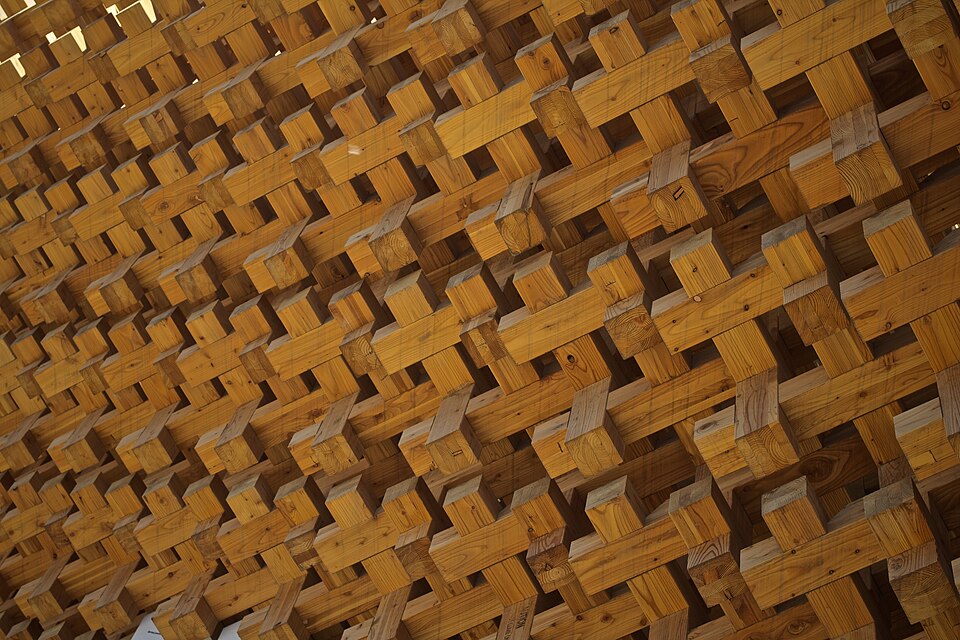
Take the miyadaiku, the carpenters who build and restore Japan's temples and shrines. Their kigumi joinery connects timber without nails or metal fittings, using more than 200 joint types. Because the members interlock in a planned sequence, a building can be taken apart, its damaged parts replaced, and put back together; some have stood for centuries this way. The circular economy now promotes this principle as "design for disassembly." The miyadaiku never needed the term. CRAFT classifies their craft as critically endangered.
The opportunity is not simply to make research faster. It is to make previously disconnected forms of knowledge speak to one another, and to discover that the answer to a question about tomorrow has sometimes been hiding in a question asked centuries ago.
How Naked River works with the three tenses
Every Naked River project begins with a full Brand Audit, whatever the brief. It reads the past and the present together: the heritage, culture, and history that remain a brand's most durable differentiator, set against what people actually experience today.
The future is explored through the Future Prism®, which builds plausible scenarios for the category from social, technological, and economic research and from stimuli cases of innovators already reshaping it. Each scenario is defined by the conditions required for it to materialize, not by a preferred prediction.
The tenses meet in the Value Sphere®, where opportunities from the scenarios are tested against the brand's DNA, and in the Seeding Innovation System®, which turns them into innovation the brand can plant and grow. The output is one recommendation, not three.
Beyond the tyranny of the new
Innovation has an understandable fascination with what comes next: the next technology, the next behavior, the next generation, the next disruption. Yet novelty is not the same as progress.
Each tense, left alone, decays into a caricature. The past becomes a museum. The present becomes a dashboard. The future becomes science fiction.
Innovation without memory risks becoming novelty. Heritage without reinvention risks becoming preservation for its own sake. And strategy without foresight risks becoming the management of yesterday's assumptions.
The sociologist Elise Boulding proposed that we each live in a "200-year present": the span from the birth of the oldest person alive today to the death of the youngest person born today. Brands live in something similar. Every brand is shaped by what it has inherited, defined by what it does today, and ultimately judged by what it makes possible next.
Sources that informed this piece:
UNESCO, Traditional craftsmanship.
Toyota Motor Corporation, Origins of the Toyota Production System.
Harvard Business School, HBS Cases: LEGO.
David C. Robertson, Brick by Brick: How LEGO Rewrote the Rules of Innovation (Crown Business, 2013).
Starbucks, Transformation Agenda Communication #6 (February 11, 2008).
CNNMoney, Coffee break for Starbucks' 135,000 baristas (February 25, 2008).
Pierre Wack, "Scenarios: Uncharted Waters Ahead", Harvard Business Review (September–October 1985).
Shell, What are Shell Scenarios?
The Japan Times, Yoshiharu Hoshino profile (November 5, 2017).
CRAFT — World Craft Depository, Traditional Japanese Architectural Joinery (Miyadaiku), record CRAFT-0486.
Elise Boulding, Building a Global Civic Culture (Teachers College Press, 1988).
Hero image: the Japan Pavilion at Expo Milano 2015, designed by Atsushi Kitagawara with traditional Japanese joinery. Photo by ecodallaluna, CC BY-SA 2.0, via Wikimedia Commons.
